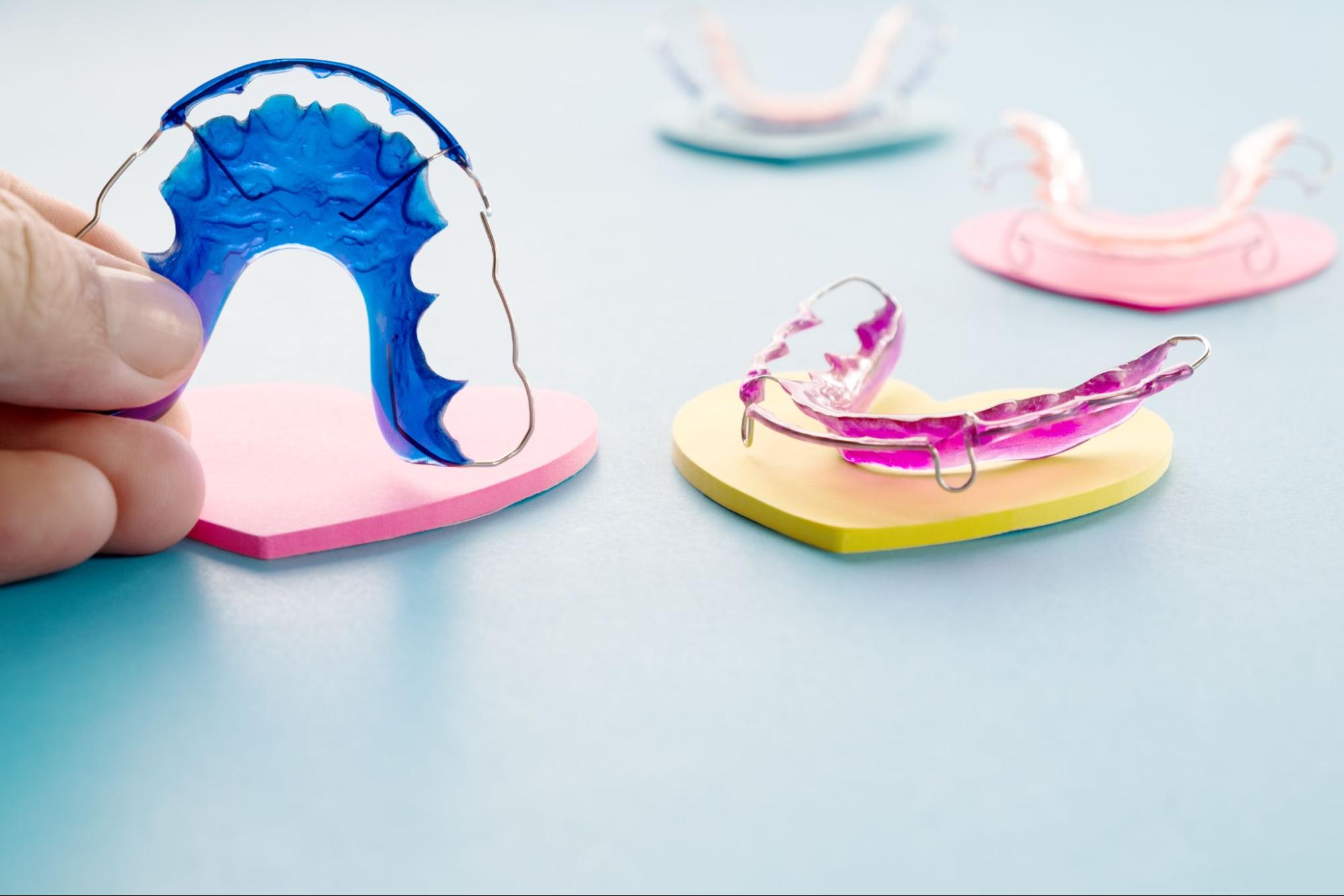
Retainer care is the daily practice of cleaning and storing the appliance that holds your teeth in their corrected positions after braces or Invisalign. It involves rinsing, gentle brushing, regular soaking, and safe storage. Done consistently, retainer care prevents plaque, bacteria, and odor buildup while protecting both your oral health and your alignment results.
A retainer is what holds your new smile in place after braces or Invisalign, and that’s exactly why cleaning and caring for it matters. Daily cleaning prevents plaque, bacteria, and odor from building up on the appliance, which protects both your oral health and the alignment results you worked so hard to achieve.
We tell every family at Ollins Orthodontics that retainer care is the final piece of your smile journey. Without it, the time, effort, and investment of orthodontic treatment can quietly slip away.
Retainer care applies to both types you might receive:
- Removable retainers that you take out for meals and cleaning
- Fixed retainers, a thin wire bonded behind your front teeth
Both styles trap food particles, saliva, and bacteria. Skip the cleaning routine, and you may notice bad breath, a cloudy appearance, white tartar spots, and a higher risk of cavities or gum irritation around the appliance. A few minutes of care each day keeps your retainer working the way it should.

How Retainers Work to Protect Your Smile
Teeth have a memory. After braces or aligners finish moving them, the bone and ligaments around each tooth need time to settle. Without retention, teeth naturally drift back toward their old positions, sometimes within weeks. Surprising, right?
Removable retainers fit snugly over your teeth and gently hold them in place. Fixed retainers use a small wire bonded behind your upper or lower front teeth for constant, behind-the-scenes support. Both styles do the same job, just in different ways.
Here’s the typical retention pattern Dr. Bruce Ollins and Dr. Gabriel Ollins may recommend:
- Full-time wear for the first several months after treatment
- Nighttime-only wear once teeth have stabilized
- Long-term nightly wear to maintain your results
Retention is not a short phase. It’s an ongoing part of your orthodontic care. Teeth can shift throughout life due to natural aging, so wearing your retainer long-term is one of the best ways to keep your smile straight for years after treatment.
Benefits of Cleaning and Caring for Your Retainer
A clean retainer does more than look nice. It actively protects your teeth, gums, and overall oral health. When you skip cleaning, bacteria and food debris build a film on the surface that gets pressed right against your teeth every time you wear it.
How Does a Clean Retainer Protect Your Teeth and Gums?
A consistent care routine pays off in ways you’ll notice quickly and ways that protect you for years:
- Less bacteria and plaque. Daily cleaning stops the slimy buildup that leads to tartar and white spots.
- Fresh breath. Retainers absorb odors quickly. Cleaning keeps them, and you, smelling fresh.
- Lower cavity and gum irritation risk. A dirty retainer holds bacteria against tooth enamel and gum tissue for hours.
- Lasting alignment. A retainer you actually want to wear is one you’ll wear consistently, which protects your results.
A dirty appliance sitting against your enamel for hours every night can create problems. Keeping it clean helps keep that risk down.
Will Cleaning My Retainer Help It Last Longer?
Yes, and that’s one of the most practical reasons to stay consistent:
- A longer-lasting appliance. Proper care can extend the life of your retainer, so you replace it less often.
- A clear, discreet appearance. Clean removable retainers stay see-through instead of turning cloudy or yellow.
Think of it this way: your retainer spends hours every day inside your mouth, touching your teeth and gums. Keeping it clean is keeping your mouth clean. A few minutes of daily care can help you avoid cavities, replacement costs, and a cloudy appliance you’d rather hide.
Fixed vs. Removable Retainers: Cleaning Differences
Fixed and removable retainers both keep your teeth in line, but they ask different things of you when it comes to care. Knowing the differences helps you build the right routine.
Removable retainers come out for cleaning, which makes the job easier. You can brush, soak, and rinse them outside your mouth. The trade-off? They’re easy to lose or damage, and they only work when you actually wear them.
Fixed retainers stay bonded behind your teeth around the clock. They’re always working, but they trap food and plaque along the wire, so flossing takes extra effort with a threader or water flosser.
| Feature | Fixed Retainer | Removable Retainer |
|---|---|---|
| Cleaning method | Floss threader, water flosser, careful brushing around the wire | Brush, rinse, and soak outside the mouth |
| Daily effort | Built into your regular brushing and flossing routine | Requires removal, cleaning, and storage |
| Risk of loss | None, it’s bonded in place | Can be misplaced or thrown out with napkins |
| Risk of damage | Wire can come loose from chewing hard foods | Can crack, warp, or be chewed by pets |
| Convenience | Always in, nothing to remember | Easy to clean, but easy to forget |
| Visibility | Hidden behind teeth | Clear styles are nearly invisible |
| Office visits for repair | May need an in-office appointment | May need a replacement if lost, cracked, or warped |
Many patients at Ollins Orthodontics wear a combination, like a fixed retainer on the bottom and a removable one on top. Whichever style Dr. Bruce or Dr. Gabriel recommends, the cleaning routine becomes second nature within a couple of weeks.

How Much Does Retainer Upkeep Cost?
Caring for a retainer is one of the most cost-effective habits in your entire orthodontic care. Daily cleaning costs very little, while replacing a lost or damaged retainer costs more. A few minutes of care each day protects the bigger investment you made in your braces or Invisalign treatment.
Most cleaning supplies are inexpensive:
- A soft-bristled toothbrush dedicated to your retainer
- Mild, unscented soap or a non-abrasive cleanser
- Retainer soaking tablets or solution
- A ventilated storage case
What drives up the cost is damage and replacement. Hot water can warp removable retainers in seconds. Harsh chemicals, mouthwash with alcohol, and abrasive toothpastes can cloud or scratch the surface. Leaving a retainer wrapped in a napkin almost guarantees it ends up in the trash.
Fixed retainers can come loose if you chew on ice, hard candy, or pen caps. When that happens, you’ll need a quick visit to your practice for a repair or replacement. Investing a few minutes a day in care is far easier, and far less costly, than starting over with a new retainer. A small daily habit beats a surprise replacement bill every time.
How to Clean and Care for Your Retainer Step by Step
To clean a retainer: rinse it right after removal, brush gently with mild soap, soak it a few times a week, avoid all heat, and store it in a ventilated case. For fixed retainers, floss daily under the wire and brush carefully around the bonded areas. These simple steps keep the appliance fresh and effective.
Building a simple daily routine keeps your retainer fresh, clear, and effective for years. Here’s the step-by-step approach the team at Ollins Orthodontics shares with every family.
For removable retainers:
- Rinse right after removal. Cool or lukewarm water washes away saliva and debris before they harden.
- Brush gently. Use a soft toothbrush with mild soap or a non-abrasive cleanser. Skip regular toothpaste, which can scratch the plastic.
- Soak regularly. A few times a week, soak your retainer in a retainer cleaning tablet solution to dissolve buildup and freshen the appliance.
- Avoid heat at all costs. Hot water, dishwashers, microwaves, and car dashboards can warp your retainer quickly.
- Store it safely. Always use a ventilated case. Never wrap it in a napkin, where it’s likely to be tossed out.
For fixed retainers:
- Floss daily using a floss threader or super floss to reach under the wire.
- Try a water flosser for an easier clean around the bonded areas.
- Brush carefully around the wire and the bonding spots, where plaque loves to hide.
- Watch what you bite. Avoid hard, sticky, or chewy foods that can pop the wire loose.
A few extra reminders: never use bleach, alcohol-based mouthwash, or abrasive cleaners on any retainer. If your removable retainer ever feels tight after a few nights away, call your practice right away. That can be a sign teeth are starting to shift, and we can help you get back on track.
Patients who recently finished braces can also review our Life With Braces page for additional care tips, and families comparing treatment paths can explore Clifton braces, Clifton Invisalign, and Invisalign in Clifton.
Frequently Asked Questions About Retainer Care
How often should I clean my retainer?
Rinse your removable retainer every time you take it out, and give it a gentle brushing once a day. Plan on a deeper soak with a retainer cleaning tablet two or three times a week. For fixed retainers, flossing under the wire every day keeps plaque from settling along the bonding sites.
Can I use toothpaste on my retainer?
Regular toothpaste is too abrasive for most retainers. The tiny scrubbing particles that polish enamel can scratch the plastic, creating cloudy spots where bacteria love to hide. Use mild, unscented soap or a non-abrasive retainer cleanser with a soft toothbrush instead.
How long will I need to wear a retainer?
Most patients wear their retainer full-time for the first few months, then switch to nightly wear long-term. Teeth can shift throughout your whole life, so nightly retainer wear is usually a lifelong habit. It’s one of the best ways to protect your treatment results.
What happens if I don’t clean my retainer?
A neglected retainer can become a breeding ground for bacteria, plaque, and tartar. You may notice bad breath, a cloudy or yellow appearance, and a higher risk of cavities and gum irritation. Over time, hardened buildup can even change how the retainer fits.
How do I clean a fixed retainer?
Use a floss threader or super floss to slide regular floss under the wire and clean between each tooth. A water flosser can make the job quicker and reach spots traditional floss may miss. Brush carefully around the wire twice a day, and let your team know if you ever feel a loose spot.

Need Help With Your Retainer?
Caring for your retainer is the final, most rewarding step in your smile journey with Ollins Orthodontics. If you have questions about your retainer, need a replacement, or feel like your retainer no longer fits correctly, our team is here to help.
Visit our Get Started page, schedule a free exam, or learn more about your first visit. We also offer support for emergency orthodontic care if something breaks or feels loose.